
Polk County septic guide
Use the official links on this page to see who can do septic work, when a permit or inspection may be needed, and which records to keep with your property.
Published by Demand Leads Media. Reviewed July 28, 2026 against the official county, Florida DEP, and EPA sources linked on this page.Read our editorial standards.
Start with Polk County’s current rules
As of this review, the Florida Department of Health in Polk County says it evaluates, permits, and inspects the installation of new and repaired onsite sewage treatment and disposal systems in the county. Its public page also says permits must be obtained to install or repair these systems.
Florida’s statewide onsite-sewage program is transitioning between agencies in stages. That does not mean every county changed at the same time. Polk County’s current public program page remains the practical starting point for a Polk property, while Florida DEP publishes statewide forms, rules, contractor information, and transition updates.
Describe the property and proposed work before assuming which form, evaluation, design, or inspection applies. A routine pump-out, a component repair, a drain-field repair, an alteration, and a new system do not necessarily follow the same path.
Visit Polk County’s septic programKnow the permit steps before work starts
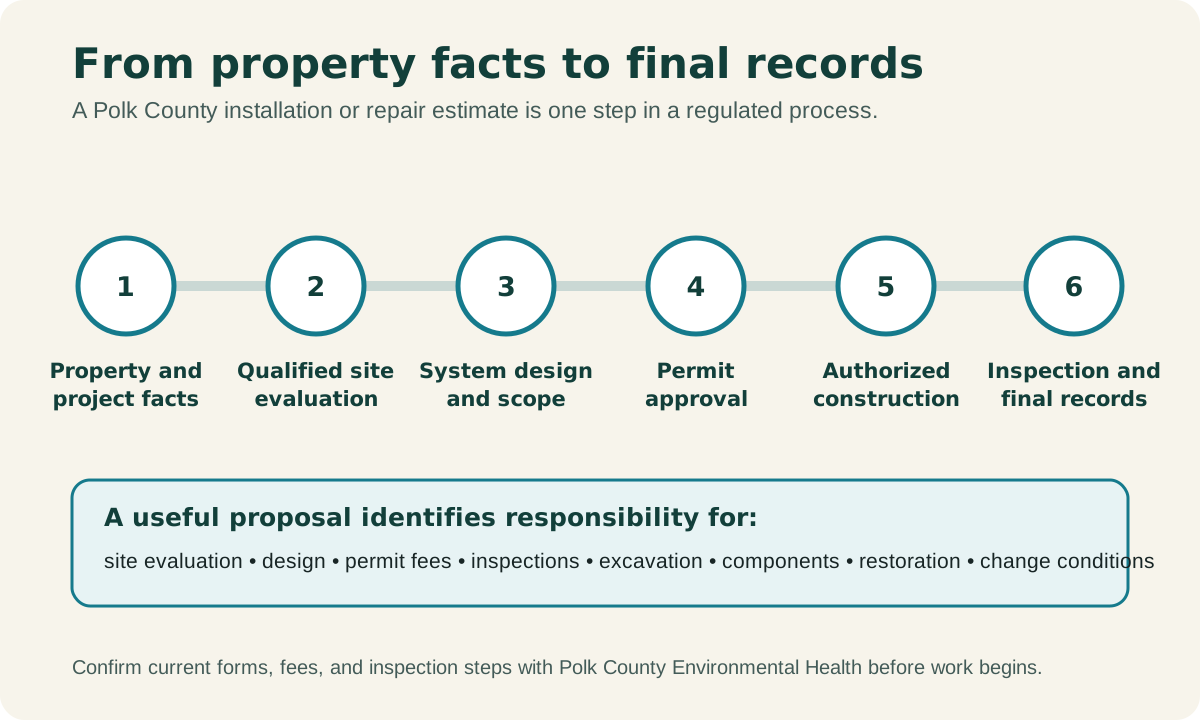
Begin with the address, property use, proposed bedrooms or wastewater demand when relevant, the type of project, known well and system locations, and any prior permits or plans. A qualified professional may need to evaluate the site before the system type or final scope can be established.
Ask who is responsible for the application, site or soil work, design, permit fees, construction notices, inspection scheduling, corrections, and final approval. Those responsibilities should be visible in a written proposal rather than implied by one total price.
- Confirm the current authority and application path.
- Gather existing permit, plan, and property records.
- Complete the site evaluation or design work required for the project.
- Receive the applicable permit before regulated construction begins.
- Use qualified, authorized people for the approved scope.
- Complete required inspections, corrections, and closeout records.
Verify who may perform septic work
Polk County’s public guidance says only registered septic-tank contractors or licensed plumbers may work on onsite systems, subject to the homeowner exception described by the county. A business name on a truck, estimate, or website is not a substitute for verifying the responsible person and current authorization.
Ask for the legal business name, the name of the person whose credential covers the work, the credential type and number, and the permit responsibility. Check the information through the current Florida or county resource before authorizing regulated work. Also confirm insurance directly when it matters to the project; this site does not certify a policy from a web claim.
Review Florida contractor registration resourcesUnderstand the private-provider inspection option
Florida allows authorized private providers to perform specified onsite-system inspections under the current program. A private provider does not erase the permit, documentation, reporting, or agency-review process, and the option is not the same as hiring any contractor to approve their own work.
Before choosing that path, confirm who is authorized, what notices and forms are required, who uploads reports and photographs, which deadlines apply, how conflicts are handled, and what the county or state will still review. Keep the authorization and inspection package with the permit records.
Read Florida DEP’s private-provider inspection guidanceKeep a complete property record
Good records can reduce repeated location work, show what was actually approved, and give a future provider better evidence than a verbal service history. Keep the records with the property rather than only in one contractor’s customer portal.
- Permit, application, site evaluation, design, and approved plan
- Tank, drain-field, well, and system-component locations
- Pumping, inspection, repair, alteration, and installation dates
- Written findings, photographs, measurements, and invoices
- Inspection approvals, correction notices, and final closeout
- System type, operating instructions, warranty, and maintenance agreement
Use maintenance guidance as a starting point
EPA says an average household system should be inspected at least every three years and is typically pumped every three to five years. Household size, wastewater volume, solids, tank size, and system type affect timing. Systems with pumps, floats, or mechanical components may require more frequent attention.
That national guidance is not a Polk County legal interval and does not diagnose one property. Use the system records, measured conditions, manufacturer or operating requirements, and a qualified provider’s documented findings to plan the next service.
Read EPA septic-care guidanceQuestions to answer before work begins
- What property facts and records were used to define the scope?
- Which permit, inspection, and design responsibilities are included?
- Who is the credentialed person responsible for regulated work?
- What excavation, disposal, old-system work, and restoration are included?
- Which site discoveries or agency changes could change the price?
- Which approval, drawing, warranty, and maintenance records will I receive?
Compare written scope, assumptions, and exclusions—not only the total. If the provider cannot explain who handles the permit, inspection, and closeout for regulated work, pause before approval.
Need a septic pro who can explain the next step?
Tell us what work you are planning and where the property is. We send your request to one qualified provider at a time and follow up if contact does not happen.
Help me find a septic proNo call-list blast. No pressure to hire.