
Drain field problems in Lakeland, FL
Wet ground, sewage smell, bright green growth, or a problem that returns after pumping can point to drain-field trouble. Keep traffic and extra water away from the area and ask a septic pro to check it.
Polk Septic Help is an independent referral publisher, not the contractor performing the work.
One request goes to one qualified provider at a time. We follow up if contact does not happen.
Published by Demand Leads Media. Reviewed July 28, 2026 against the official sources listed below. Read our editorial standards.
Possible warning signs
The strongest request describes the pattern and site context. Note whether the condition appears over the known or suspected treatment area, whether surrounding ground is dry, whether there is odor or surfacing wastewater, and whether indoor drainage changes at the same time.
A wet yard after substantial rain is not by itself a drain-field diagnosis. Roof discharge, grading, irrigation, groundwater, soil saturation, tank or distribution conditions, and household loading can overlap. A provider may need records and an onsite evaluation.
- Wet or soft ground when surrounding soil is dry
- Surfacing wastewater or sewage odor
- Unusually green or fast-growing grass in one area
- Slow drainage or backup that returns after pumping
- Visible settling, erosion, or damage
Everyday drain-field protection
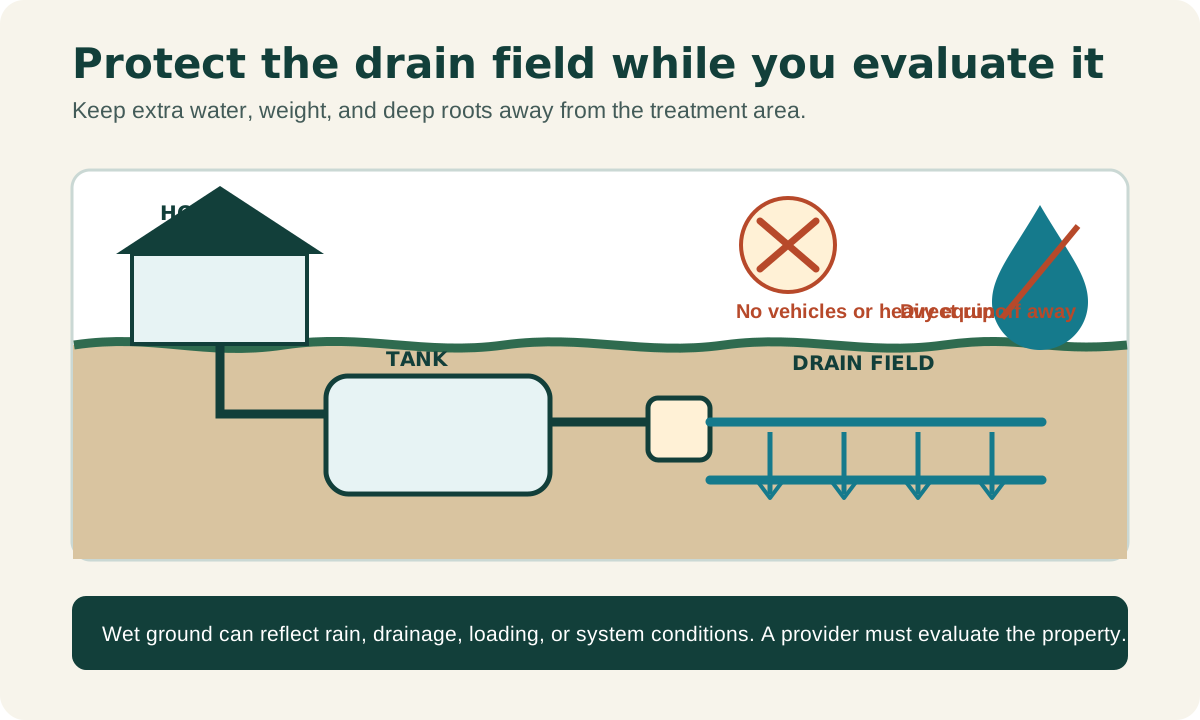
EPA recommends maintaining the drain field by avoiding parking or structures over it and directing roof drains, sump pumps, and other excess water away. Compaction and added water can interfere with the soil's treatment and dispersal role.
Use shallow-rooted grass or other provider-appropriate cover. Do not excavate, add fill, install a pool, pave, place a building, or plant deep-rooted vegetation over a suspected field without confirming the system location and applicable requirements.
- Keep vehicles and heavy equipment off the area
- Direct roof, driveway, and landscape drainage away
- Use water efficiently and repair plumbing leaks
- Avoid deep-rooted trees and shrubs over the field
- Keep the location in the property maintenance record
What an evaluation may consider
The provider may need to separate how much wastewater is entering the system from how it moves through the tank, outlet, distribution, and soil treatment area. That can require more than a visual walkover.
Ask what records, access points, levels, components, tests, and site observations are included. If the drain field cannot be located or parts are inaccessible, the provider should identify that limitation rather than present a complete diagnosis.
- Tank levels and outlet condition
- Distribution and visible field conditions
- Recent rainfall and site drainage
- Household water use and system loading
- System age, design, permits, and repair history
Rainfall and household water use change the evidence
Central Florida rain can make a drainage problem look like a septic problem and can also expose a system that is already struggling. Record the timing of rainfall, irrigation, roof discharge, laundry, guests, leaks, and repeated high-water use.
Reduce avoidable household water when backup, alarm, surfacing wastewater, or severe wetness is present. Repair plumbing leaks and spread appliance use where practical. These steps reduce loading but do not repair a failed component or treatment area.
- Is the wet area present when nearby soil is dry?
- Does it return after laundry, bathing, or other concentrated water use?
- Is roof, driveway, pool, or irrigation water directed toward the area?
- Did the symptom begin after a storm, power interruption, or recent service?
- Does sewage odor, backup, or unusually green growth occur in the same area?
Repair or replacement estimate factors
Site access, soil and elevation conditions, system design, permit requirements, available area, and the actual failure or damage can change the scope. An onsite evaluation is normally needed.
A limited component, line, distribution, drainage, or dosing issue can have a different scope from treatment-area rehabilitation or replacement. Ask the provider to identify what evidence supports the proposed option and whether another approved repair method is applicable.
A replacement proposal should identify the evaluated area, design assumptions, system type and capacity, permit and inspection responsibility, existing-system abandonment or reuse, excavation, materials, controls, grading, restoration, and final records.
Polk County permit and inspection boundary
The Florida Department of Health in Polk County says permits must be obtained to install or make repairs to onsite systems. The current county and Florida DEP process should be checked before drain-field work begins.
Only a registered septic tank contractor or state-licensed plumber may generally contract to perform septic work, subject to the stated owner-occupied homeowner exception and other requirements. Verify the responsible person or business through the current state resource.
- Who will confirm the existing permit and system record?
- Who will prepare the site evaluation or design information?
- Who will submit the permit and respond to requested changes?
- Who will schedule construction inspections and retain approval records?
- What property conditions or county findings could change the proposal?
Compare drain-field proposals carefully
A lower total can omit site restoration, controls, permit work, old-component handling, or necessary evaluation. Put proposals in the same ledger before comparing price.
- Diagnosis and evidence supporting repair, alternative method, or replacement
- Area, trench, distribution, dosing, treatment, and capacity assumptions
- Site evaluation, engineering, permit, inspection, and testing responsibility
- Trees, utilities, wells, structures, setbacks, access, and replacement-area constraints
- Excavation, old-system treatment, fill, grading, sod, irrigation, and cleanup
- Components and controls included, excluded, reused, or separately priced
- Change-order triggers, payment schedule, warranty, maintenance, and records
Questions homeowners ask
Does wet grass mean the drain field has failed?
Not by itself. Rain, irrigation, roof runoff, grading, groundwater, household loading, and septic conditions can overlap. Odor, surfacing wastewater, recurring backup, or wetness when nearby ground is dry adds useful context.
Can pumping fix a drain-field problem?
Pumping can reduce tank contents and may provide temporary relief in some situations, but it does not repair every distribution, soil-treatment, drainage, or component problem.
Can vehicles park over a drain field?
EPA advises keeping vehicles and heavy equipment off the drain field. Weight can compact soil or damage buried components.
Does drain-field repair require a permit in Polk County?
Polk County says permits are required to install or repair onsite systems. The exact repair, permit, and inspection path should be confirmed for the property and proposed work.
Ready to stop guessing and talk to a septic pro?
Tell us what changed, where the property is, and when you need help. We send your request to one qualified provider, follow up, and move to the next qualified provider if contact does not happen.
Help me find a septic proNo call-list blast. No pressure to hire. Provider contact and a quote are not guaranteed.
Keep the free Polk County homeowner guide