
What septic service costs in Polk County, FL
A septic price can change with tank size, buried lids, truck access, the problem, permits, and repair work. Give the provider the right facts, then compare the written work—not only the total.
Polk Septic Help is an independent referral publisher, not the contractor performing the work.
One request goes to one qualified provider at a time. We follow up if contact does not happen.
Published by Demand Leads Media. Reviewed July 28, 2026 against the official sources listed below. Read our editorial standards.
Reported local ranges, and what they are not
This page explains what moves a septic estimate. It is reasonable to also want a number, so here is what has actually been published about Polk County, with the source attached to each figure.
LkldNow reported in October 2024, updated April 2025, that a residential septic cleanout in Polk County moved from roughly $350 to roughly $600 after the county lost its only septic waste disposal site. Broad home-service estimators still publish lower averages for nearby metros, with Angi reporting about $353 for Tampa and about $323 for Orlando.
None of those figures is a quote, and none of them is a price offered by any provider through this site. They are useful only for recognizing whether a written quote sits inside a plausible range. The property, access, condition, disposal volume, and scope decide the actual number, and a provider who has not seen the property cannot know them.
- Polk County residential cleanout reported near $600 after August 2024 (LkldNow)
- The same cleanout reported near $350 before that change (LkldNow)
- Angi Tampa average about $353; Angi Orlando average about $323
- Repair, drain-field, and replacement work varies far more widely than pumping and is not usefully summarized by a single range
- Ask for the basis of a quote in writing rather than comparing totals alone
Pumping and cleaning factors
A useful pumping estimate starts with the service purpose and what is known about the system. Routine maintenance with accessible lids is a different request from locating an unknown tank while a backup or alarm is active. Describe current symptoms separately so the provider can decide whether the visit also needs diagnostic work.
Ask whether the estimate assumes one accessible lid, includes uncovering, covers all appropriate compartments, includes filter service when present, and produces a written service record. Waste volume is only one part of the work; access and scope can materially change the visit.
- Tank size and number of compartments
- Number and location of access lids
- Excavation or difficult equipment access
- Solids, system condition, and requested inspection
- Waste handling and additional service needs
Repair and alarm factors
Repair pricing normally depends on diagnosis. An alarm can involve a high-water condition, float, pump, control, power, wiring, or another component, while slow drains or backup may involve household plumbing, tank levels, lines, distribution, or the drain field. A symptom does not establish the failed part.
Separate the evaluation charge from the repair proposal. Ask how diagnostic time is billed, which testing is included, whether the provider will obtain approval before additional work, and whether the proposed repair needs a permit, inspection, electrician, pump specialist, excavation, or restoration.
- Diagnostic time and access
- Failed component and compatible replacement
- Electrical, pump, tank, line, or drain-field scope
- Permit and inspection requirements
- Site restoration and follow-up testing
Installation and drain-field factors
Installation and drain-field proposals should identify the property and design basis, not simply name a system and total. Site evaluation, wastewater demand, existing records, wells, structures, elevation, setbacks, available treatment area, access, and the condition of an existing system can shape the approved scope.
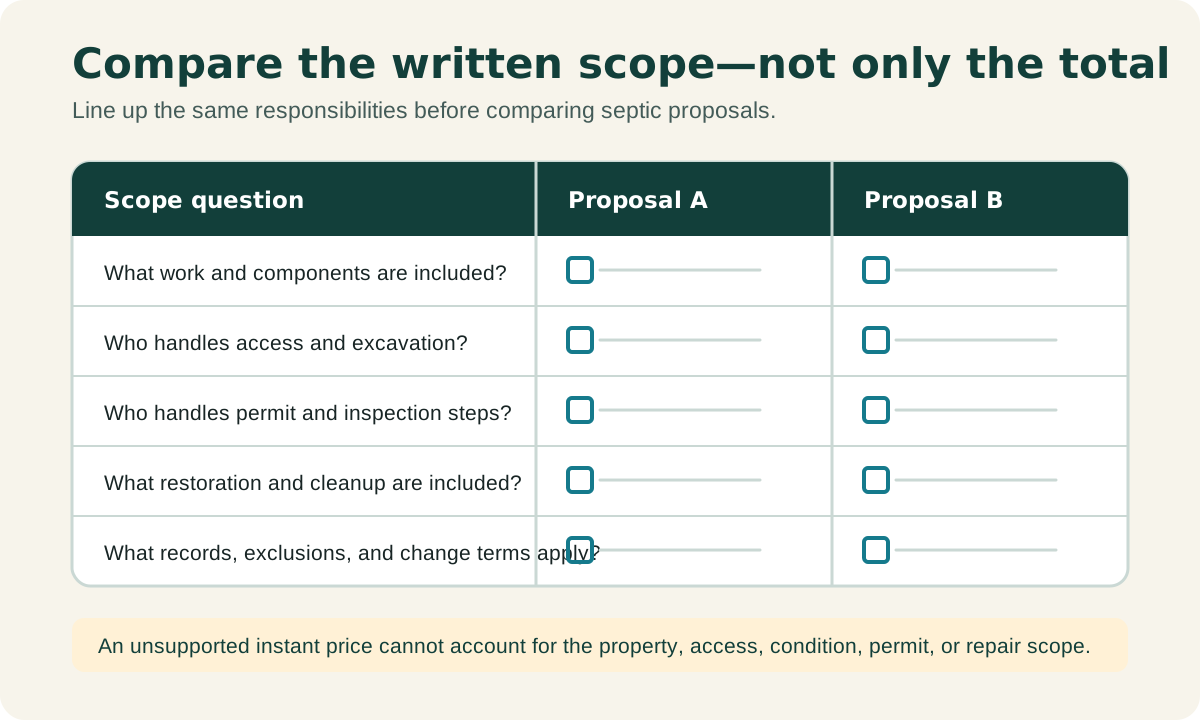
Confirm who handles the application, design or site work, permit, inspection, excavation, materials, old-system abandonment or removal when applicable, electrical or control work, finish grading, restoration, and final records. A proposal that excludes one of those categories may not be comparable with a proposal that includes it.
- Site evaluation and design
- Soil, elevation, setbacks, and available area
- System type, size, treatment, and controls
- Permits, inspections, and professional services
- Excavation, access, materials, and restoration
What to request in a written proposal
Put each proposal into the same comparison ledger. Record the exact service, components, quantities, access assumptions, permit and inspection responsibility, disposal, restoration, payment schedule, warranty, exclusions, and records. If one proposal is substantially lower, look first for a scope difference rather than assuming equal work at a better price.
Ask the provider to identify change conditions before work starts. Hidden lids, undocumented components, unsuitable access, damaged piping, unexpected groundwater, agency corrections, or a different approved design can change scope. The proposal should explain how changes are documented, priced, and approved.
- Specific work and included components
- Permit and inspection responsibility
- Site assumptions and exclusions
- Payment schedule and change process
- Service record, warranty, and maintenance needs
Access, protection, and site restoration
Show the provider gates, slopes, fences, landscaping, hardscape, overhead clearance, soft ground, and known underground utilities that may affect equipment access. Do not move or uncover a tank lid unless the provider gives safe, property-specific preparation instructions.
Ask who protects and restores disturbed areas. Excavation, sod, gravel, concrete, irrigation, fencing, and landscaping may be included, excluded, or priced as an allowance. Photograph the work area before the visit and record any access agreement in the written scope.
- Equipment route and working clearance
- Lid or component location and excavation assumptions
- Protection of people, pets, structures, and landscaping
- Responsibility for utilities, irrigation, and hardscape
- Final grading, cleanup, and restoration standard
Questions homeowners ask
Why does septic pumping pricing vary by property?
Tank size, compartments, lid location, excavation, equipment access, solids, condition, inspection scope, and added services can all change the work.
Can a provider quote a repair before diagnosing the problem?
A provider may explain rates or likely scope, but an accurate repair proposal normally depends on identifying the failed component and confirming access, permit, and restoration needs.
What makes two septic installation proposals comparable?
They should use the same design basis and clearly identify the system, components, permits, inspections, excavation, old-system handling, restoration, exclusions, maintenance, and warranty.
Should the proposal list possible change conditions?
Yes. Ask which site discoveries, access problems, permit changes, or hidden conditions could change the scope or price and how approval will be documented.
Ready to stop guessing and talk to a septic pro?
Tell us what changed, where the property is, and when you need help. We send your request to one qualified provider, follow up, and move to the next qualified provider if contact does not happen.
Help me find a septic proNo call-list blast. No pressure to hire. Provider contact and a quote are not guaranteed.
Keep the free Polk County homeowner guide