
Septic tank pumping in Lakeland, FL
Septic pumping removes waste that builds up in the tank. If you do not know the last service date—or a warning sign has started—a qualified septic pro can check what your property needs.
Polk Septic Help is an independent referral publisher, not the contractor performing the work.
One request goes to one qualified provider at a time. We follow up if contact does not happen.
Published by Demand Leads Media. Reviewed July 28, 2026 against the official sources listed below. Read our editorial standards.
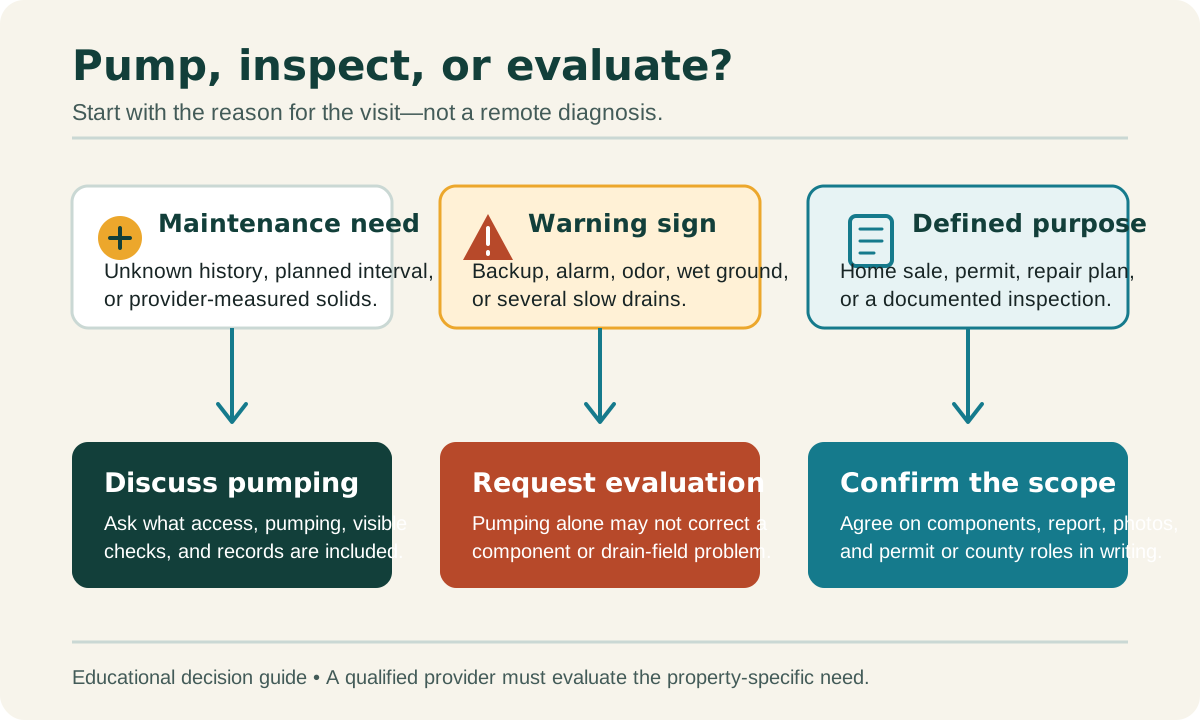
When pumping may be due
EPA says an average household septic system should be inspected at least every three years and is typically pumped every three to five years. That is general guidance, not a schedule for every property.
The actual interval depends on household size, wastewater generated, solids, tank size, and system type. Alternative systems with pumps, floats, or mechanical components can require more frequent inspection. A provider can use service records and measured tank conditions to recommend the next interval.
An unknown service history is a reason to request an evaluation, not proof that the tank is full. Likewise, a recent pump-out does not rule out a household line, pump, control, outlet, distribution, or drain-field problem.
- The service history is unknown
- A prior provider recommended a maintenance interval
- Household occupancy or wastewater use has increased
- An inspection finds that solids should be removed
- You are preparing for a broader septic evaluation
What a pumping visit generally includes
Confirm in advance whether the quoted work includes locating or uncovering lids, opening all appropriate compartments, checking visible inlet and outlet components, measuring solids, cleaning a filter if present, and providing a service record. Those tasks are not always bundled the same way.
The provider should control tank access and safe work areas. Homeowners should not open, lean into, or enter a septic tank because openings and gases can be dangerous.
- Confirm the system and access location
- Open the appropriate service access points
- Evaluate tank levels and visible components
- Remove liquid, sludge, and scum
- Restore access points and the work area
- Document observations and any recommended next step
What can affect the estimate
Access can change the visit more than a homeowner expects. Deeply buried lids, unknown tank location, fences, soft ground, landscaping, long hose distance, multiple tanks or compartments, and restricted truck placement can change labor and equipment needs.
Ask whether the proposal assumes visible lids or includes locating and excavation. If a warning sign requires diagnosis or a repair, request a separate written scope before authorizing added work.
- Tank size and number of compartments
- How easily lids and service access can be reached
- The system condition and service requested
- Additional diagnostic, permit, repair, or disposal requirements
Pumping, cleaning, and inspection are not interchangeable terms
Consumers and providers sometimes use pumping and cleaning as if they mean the same thing. The useful question is what will actually be removed, which access points will be used, which visible components will be checked, and what condition information will be recorded.
A pump-out is primarily a solids-removal service. An inspection has a defined information purpose. Diagnostic work attempts to identify a problem. Ask the provider to state which of those purposes are included instead of relying on the label alone.
- Pumping: removal of liquid, sludge, and scum through appropriate access
- Condition check: visible levels, leaks, baffles, filters, or outlet observations within the agreed scope
- Inspection: a purpose-specific evaluation with an agreed report or record
- Diagnosis or repair: additional work to identify and correct a component or system problem
Prepare the property and records
Keep vehicles and heavy equipment off the drain field and do not excavate blindly for the tank. Share known locations and let the provider determine safe access.
- Last known pumping, inspection, repair, or installation date
- Known tank, riser, lid, pump chamber, and drain-field locations
- Household occupancy and any recent increase in water use
- Current alarms, odors, backups, wet areas, or slow drains
- Recent rain, power interruption, plumbing work, or heavy appliance use
- Gate, pet, parking, surface, or access limitations
- Permit or system records already associated with the property
Questions to ask the provider
The record should distinguish completed work from observations and recommendations. Keep it with the property so the next provider can see the service date, tank information, measured conditions, and unresolved items.
- What is included in the proposed service?
- Which access points will be opened?
- Will visible baffles, levels, and outlet flow be checked?
- How will wastewater and solids be handled?
- Will I receive a written service record?
Questions homeowners ask
How often should a septic tank be pumped in Polk County?
EPA says household tanks are typically pumped every three to five years, but the correct interval depends on the household, wastewater volume, solids, tank size, and system type. Use that range as a prompt to review records, not as a property-specific rule.
Will pumping fix a backup or wet drain field?
Not necessarily. Pumping can remove tank contents, but a line, pump, control, outlet, distribution, or drain-field condition may still require evaluation and repair.
Should the homeowner uncover the tank before the visit?
Only follow instructions from the selected provider and do not open or enter the tank. Ask whether locating and excavation are included and how the provider wants the access area prepared.
Can Polk Septic Help quote the pumping price?
No. The site does not know the tank, access, compartments, condition, disposal needs, or selected provider's verified price. The provider should give a property-specific written scope and price.
Ready to stop guessing and talk to a septic pro?
Tell us what changed, where the property is, and when you need help. We send your request to one qualified provider, follow up, and move to the next qualified provider if contact does not happen.
Help me find a septic proNo call-list blast. No pressure to hire. Provider contact and a quote are not guaranteed.
Keep the free Polk County homeowner guide