
What to expect from septic service in Polk County
A little preparation can save time during the visit. Gather the service history, note what changed, and make the work area easy to reach—without opening the tank yourself.
Polk Septic Help is an independent referral publisher, not the contractor performing the work.
One request goes to one qualified provider at a time. We follow up if contact does not happen.
Published by Demand Leads Media. Reviewed July 28, 2026 against the official sources listed below. Read our editorial standards.
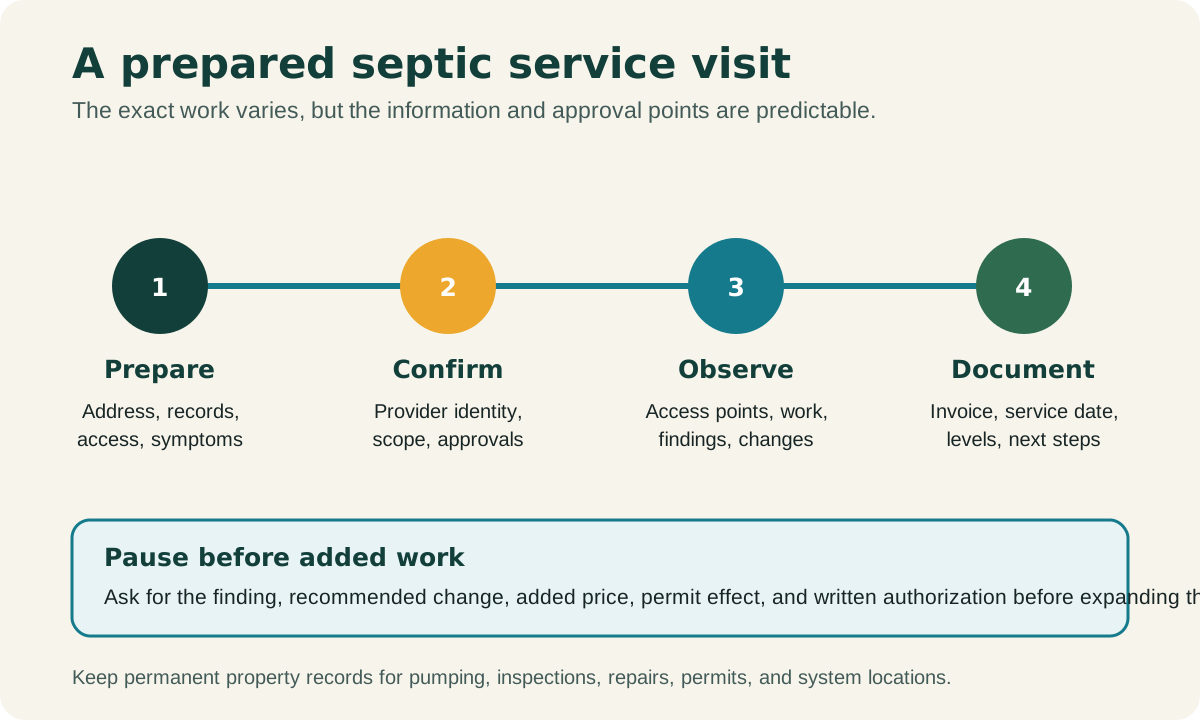
Before the visit
Confirm why the provider is coming: routine pumping, a purpose-specific inspection, an active warning sign, diagnosis, or an installation or repair estimate. The service purpose determines which access points, records, equipment, and documentation may be needed.
Describe the symptom in chronological terms. Note when it began, which fixtures or outside areas are affected, whether an alarm is active, and whether the change followed rainfall, unusually high water use, a power interruption, pumping, or recent work. Avoid prescribing the repair before the property is evaluated.
- Confirm the property address and service purpose
- Gather pumping, repair, installation, and permit records
- Note the tank and drain-field location if known
- Keep the work area and equipment route accessible
- Describe symptoms, timing, water use, rainfall, or recent changes
At arrival and before the scope changes
Confirm the provider’s identity, the service address, the requested work, and the estimate or diagnostic terms before access begins. For regulated work, verify the responsible credential and who handles permits and inspections. Keep children and pets away from tanks, excavation, hoses, trucks, and affected wastewater areas.
If the provider finds a different condition, ask for the observation and proposed next step in plain language. Confirm the added work, price, exclusions, permit implications, and authorization method before the scope changes. A service call should not become an open-ended repair approval.
- Match the arriving business and person to the scheduled provider
- Review the purpose, access assumptions, and written starting scope
- Identify the person authorized to approve changes
- Pause for a written explanation before additional work
- Keep unsafe openings and work areas controlled by the provider
During the visit
A pumping visit, inspection, and diagnostic evaluation answer different questions. Ask the provider to explain which access points and components are included, what can be observed today, and what remains outside the scope. Do not assume a pump-out includes a full inspection or that a visual check confirms the entire drain field.
Record objective findings such as service date, compartments accessed, solids or tank-level information provided, visible component condition, alarm or control observations, photographs, and recommended follow-up. Those details are more useful for the next provider than a vague note that the system was serviced.
- Confirm the provider identity and proposed scope
- Ask which access points and components will be evaluated
- Keep people and pets away from open service areas
- Ask before approving work beyond the written request
- Record findings that affect future maintenance
After the visit
Before the provider leaves, ask what was completed, what was not evaluated, whether the system can return to normal use, and which condition should trigger follow-up. If a repair, design, permit, or specialist is needed, request the recommendation and reason in writing.
Keep the invoice, findings, photographs or sketches supplied, payment record, permit information, warranty, and maintenance instructions with the property. Update the system-location sketch only with confirmed information; do not treat an approximate homeowner memory as an official plan.
- Keep the invoice and service record
- Record tank levels, pumping date, and observed condition
- Ask for written repair or maintenance recommendations
- Confirm any permit or inspection follow-up
- Update the property sketch with known system locations
Questions worth asking
Short, specific questions make the closeout more useful. Ask the provider to distinguish an observation from a diagnosis, a recommended next step from work already approved, and a general maintenance suggestion from a permit or manufacturer requirement.
- What did you observe?
- What was completed and what was not included?
- Is another evaluation or permit needed?
- What should I monitor next?
- What documentation should remain with the property?
Questions homeowners ask
Should I uncover or open the septic tank before the visit?
Do not open the tank yourself. Ask the provider what access preparation is appropriate and let trained personnel manage openings and hazardous gases.
Which records should I gather?
Use available pumping, repair, installation, permit, inspection, and property records, plus a sketch of known tank and drain-field locations.
What should I confirm before extra work begins?
Ask what was observed, what additional work is proposed, why it is needed, what it costs, and whether a permit or different specialist is required.
What should I keep after the visit?
Keep the invoice, service date, findings, measurements, photographs or sketches provided, recommendations, permit information, and any maintenance or warranty instructions.
Ready to stop guessing and talk to a septic pro?
Tell us what changed, where the property is, and when you need help. We send your request to one qualified provider, follow up, and move to the next qualified provider if contact does not happen.
Help me find a septic proNo call-list blast. No pressure to hire. Provider contact and a quote are not guaranteed.
Keep the free Polk County homeowner guide